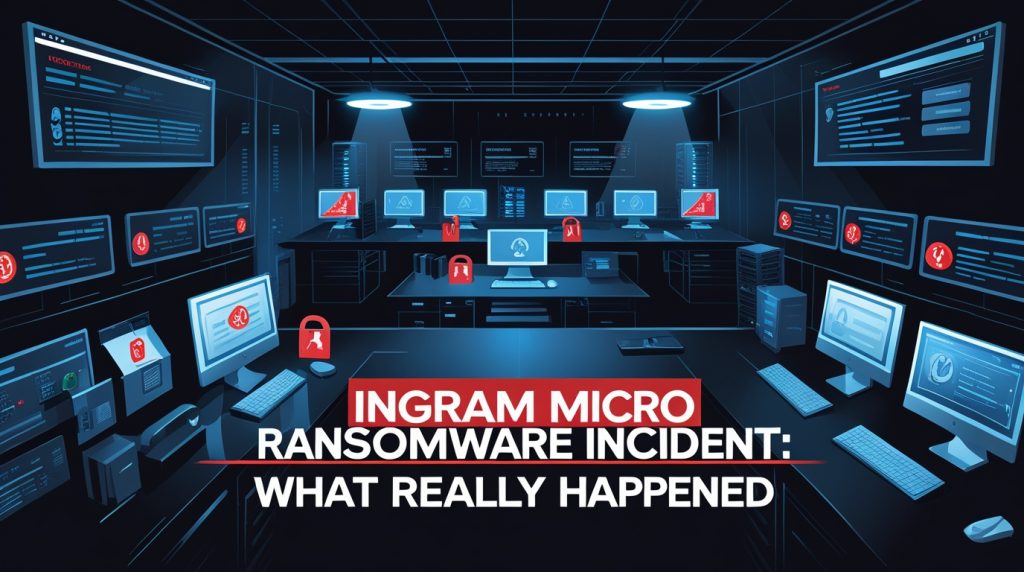
July 2025 wasn’t quiet for the tech world. Ingram Micro—one of the biggest names in IT distribution—came forward and admitted they’d been hit by a ransomware attack. Suddenly, business ground to a halt in a bunch of regions. Thousands of partners, resellers, and customers who count on Ingram for hardware, software, and cloud services felt the impact, and fast.
But this wasn’t just another blip in the endless stream of cybersecurity news. This attack put a big, flashing spotlight on how tightly wired supply chains are these days. One hack, and the ripple hits everyone. So, what really happened during the Ingram Micro breach? How did it mess with their operations? And what lessons can other businesses actually take from this mess? What is Ransomware
Who is Ingram Micro, anyway?
Ingram Micro isn’t just another tech company. They connect the world’s technology makers with businesses, resellers, and service providers. Since 1979, they’ve been working across dozens of countries, moving IT products, cloud services, software licenses, and handling logistics for just about everyone.
Because they’re so big and so central, they’re basically the backbone for a huge part of the tech industry. When someone takes down a company like this, it’s not just their problem. The shockwaves hit far beyond their own walls. Explore More
How did the ransomware attack come to light?
Early July, things started to get weird inside Ingram Micro. Employees noticed systems acting up, then out of nowhere, ransom notes started popping up on screens. It was obvious—someone had gotten in.
Ingram’s response was quick. They yanked affected systems offline to stop the malware from spreading, which helped contain the damage. But pulling the plug like that? It also threw a wrench into daily business.
Systems and Services Affected
The attack slammed some of the most important platforms that Ingram Micro and its partners rely on. Online ordering tools, key business systems, and software licensing services all took a hit.
While systems were down:
- Customers couldn’t place orders through the usual online portals.
- Software license processing stalled.
- Internal workflows got messy.
Not everything went dark, though. Teams could still use email and collaboration tools to coordinate and try to get things back on track. At least something was still working.
Disruption to Global Operations
When ransomware hit Ingram Micro, the impact rippled across the globe. Suddenly, resellers and managed service providers struggled with delays—placing orders took longer, shipments got backed up, and no one could access their account info like usual.
That kind of slowdown hits hard. Businesses counting on fast delivery for hardware or licenses had to slam the brakes on projects, or scramble for quick fixes just to keep things moving.
Sometimes, the only way to get orders through was by calling or emailing—yeah, manually. That bogged everything down even more, and you can imagine how frustrated their partners felt.
Who Was Behind the Attack?
Investigators traced the attack to a well-known ransomware group that tends to go after big organizations. These folks usually slip in through network entry points—think VPNs or remote logins.
Once inside, they locked up parts of the network and left ransom notes demanding payment. They didn’t stop there, either. Like a lot of modern ransomware gangs, they used double extortion tactics—so they probably copied data before encrypting it, just to turn up the heat.
Was Data Stolen?
After the attack, Ingram Micro admitted that attackers might have accessed or taken some data. At first, no one really knew how much or what kind—investigations were still underway.
Ingram Micro promised to notify anyone affected, especially if personal or sensitive info was involved, and said they’d follow all the privacy laws.
But that lingering uncertainty made people nervous. Customers and partners had to worry about what could happen if their data ended up in the wrong hands—fraud, identity theft, you name it.
Company Response and Recovery Efforts
Ingram Micro didn’t waste time. As soon as the attack was discovered, they jumped into action.
Immediate steps? They isolated and shut down affected systems, called in their own security teams, and brought in outside cybersecurity experts for backup.
Getting everything running again took days. They restored systems bit by bit, started order processing in stages, and set up workarounds so business didn’t just grind to a halt while they patched things up.
The recovery wasn’t easy. Every system needed careful testing before it could come back online—nobody wanted to risk a repeat.
Challenges During the Incident
Even with teams working to fix things, the incident brought a bunch of issues to the surface.
Communication was a huge pain point. Partners and customers kept saying they didn’t have enough updates, or the ones they got were confusing. That made it tough for them to figure out what to do while systems were down.
Then there was the recovery time. Sure, some services came back up fast, but people didn’t really trust the system again until a lot later.
All of this just goes to show—when it comes to cybersecurity, you’ve got to be open and keep the lines of communication clear.
Why This Attack Matters
The Ingram Micro ransomware attack isn’t just another headline—it actually shows how supply chain attacks can shake up entire industries.
When a major distributor goes down:
- Thousands of businesses feel it right away
- Tech projects get pushed back
- Customers start to lose faith
What happened here makes it clear: cybersecurity isn’t just a problem for one company. Everyone—partners, vendors, customers—has some skin in the game.
Lessons Learned from the Ingram Micro Ransomware Attack
There’s a lot to take away from what happened.
1. Nobody’s Untouchable
Doesn’t matter how big your company is—hackers can still get in.
2. Lock Down Remote Access
If people can log in remotely, those systems need serious protection. No shortcuts.
3. Backups and Recovery Plans Matter
You need backups you can count on, and you have to know your recovery plan actually works—not just on paper.
4. Talk to Your Customers
When things go wrong, people want clear, honest updates. It’s the only way to keep their trust.
5. Security Never Sleeps
Cybersecurity isn’t something you set up once and forget. You need to stay sharp—keep monitoring, keep updating, keep your team in the loop.
What This Means for Businesses?
For every business out there, big or small, this attack is a wake-up call. Hackers are targeting the companies that keep the digital world running.
So, what should you do? Go back over your security policies. Watch your networks more closely. Make sure your employees know how to spot phishing and scams. And get your incident response plans in order.
Being ready isn’t just a nice-to-have—it’s what separates a small hiccup from a disaster.
Final Thoughts
The ransomware attack on Ingram Micro hit hard. It messed with global operations, broke supply chains, and made a lot of people question just how tough their digital defenses really are. The company worked to bounce back, but the whole thing exposed some real weaknesses—even in companies that seem rock solid.
With ransomware attacks on the rise, businesses can’t treat cybersecurity as an afterthought. You need to focus on prevention, stay prepared, and be open when things go wrong. It’s not just about keeping your own systems safe—it’s about protecting everyone you work with.
Bottom line? In a world where everything’s connected, one attack can ripple out and hit a lot of people. The only way to lower the risk is to take security seriously, every single day.