Nishant

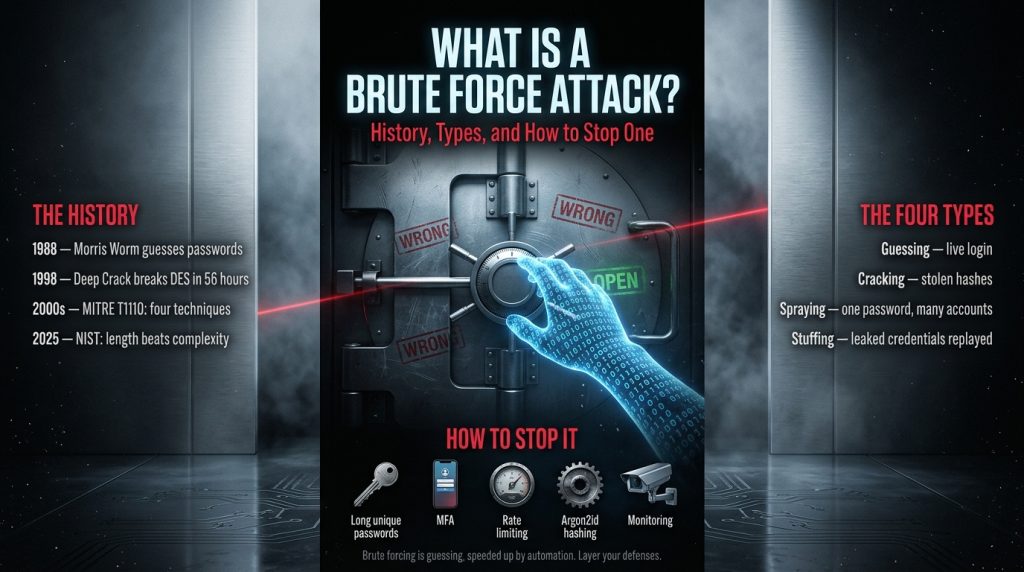
What Is a Brute Force Attack? History, Types, and How to Stop One

When you have tried entering the wrong password five times consecutively and were blocked, you have encountered the primary countermeasure to a brute force attack. This guide will walk you through the topic as I would like to have been walked through when I was first learning about it: what it is, its origin, its […]

What Is a Brute Force Attack? History, Types, and How to Stop One Read More »
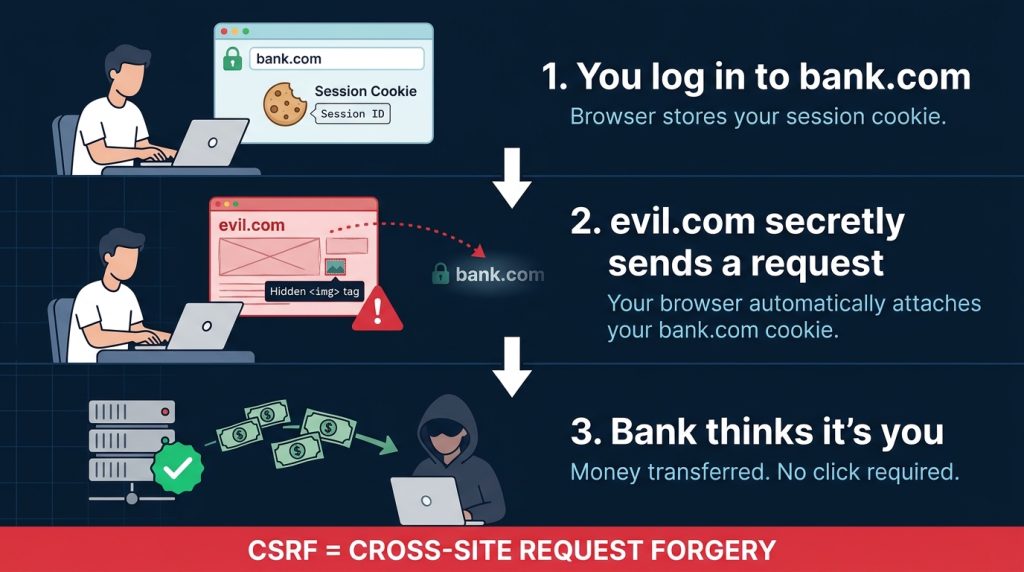
What Is CSRF? Cross-Site Request Forgery Explained for Beginner

What Is a CSRF Attack? A Beginner’s Guide to Understanding and Preventing It If you’ve ever created a login form, a password change mechanism, or a method to delete an account, you may have encountered CSRF vulnerable features. A CSRF vulnerability doesn’t mean your application will fail or raise an error. It means that it

What Is CSRF? Cross-Site Request Forgery Explained for Beginner Read More »

SQL for Beginners: History, Common Mistakes, and Real Limitation

Have you ever found yourself opening a database application, typing “SELECT * FROM users;”, and feeling like you’re casting some kind of magical spell? I’ve spent the past year learning SQL through trial and error, from error messages to baffling JOINs, and that embarrassing feeling of trying to use “WHERE COUNT(*) > 5” and realizing

SQL for Beginners: History, Common Mistakes, and Real Limitation Read More »

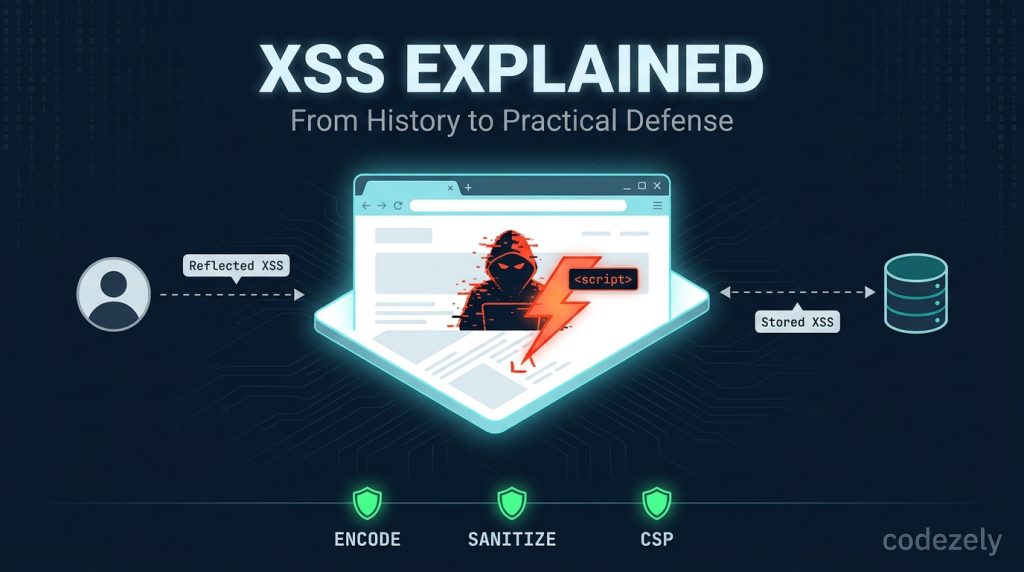
XSS Explained Simply: Types, Real Risks, and Practical Defenses

Some things to know before proceeding: I am a learner, like everyone else. What follows in this essay is all information I could gather officially from OWASP and CWE, or through other verified sources. This information depends on context, or on version, wherever it applies. I have never tried out an attack in real time

XSS Explained Simply: Types, Real Risks, and Practical Defenses Read More »

MD5: What It Is, Why It Broke, and Where It Still Makes Sense

When you have downloaded a Linux ISO, checked the “checksum” of a file, or looked inside an older password database, you have most likely encountered MD5. It produces a fairly short string consisting of 32 characters and was ubiquitous for decades. MD5 today has an odd reputation. On one hand, it is described as “completely

MD5: What It Is, Why It Broke, and Where It Still Makes Sense Read More »

Scroll to Top