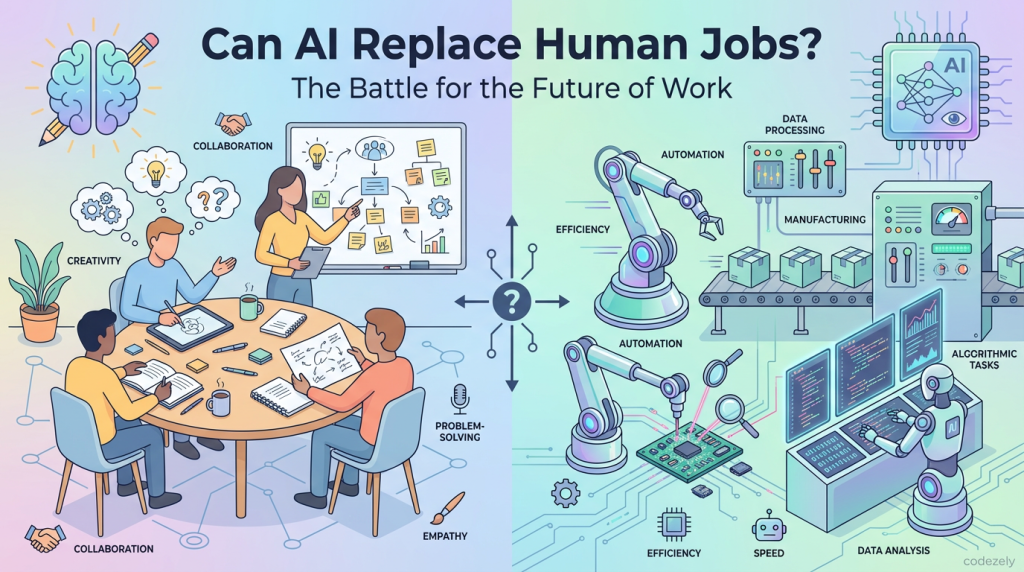
Introduction: The Whisper in the Factory
You notice it first in the little things. The break room’s gone quiet. Checkout lines move faster, but nobody’s really talking. Customer service emails show up at 3 in the morning flawless grammar, no spelling mistakes, but not a hint of personality. You get a financial report on your desk that’s eerily sharp, and you know nobody on the team stayed late to crunch those numbers.
This isn’t some far-off future. It’s just Tuesday.
People aren’t debating whether AI will take jobs at academic conferences anymore they’re talking about it over dinner. Right now, algorithms are picking through resumes, drafting contracts, spotting tumors, even writing music. There’s this uneasy feeling in the background, a quiet buzz you can’t quite shake off.
But let’s cut to the real issue. It’s not just about whether AI will take jobs. The real question is, how is work itself changing right now, and what does it mean to be human while machines are getting smarter?
No doom and gloom here. No pretending everything’s going to be perfect, either. We’re looking at the messy, sometimes contradictory, always human side of tech taking over. What’s disappearing, what’s showing up in its place, and what’s left that’s still ours, no matter what.
Part I: The Anatomy of Replacement:—How Machines Learn What We Do
The Three Waves of Automation: A Historical Echo
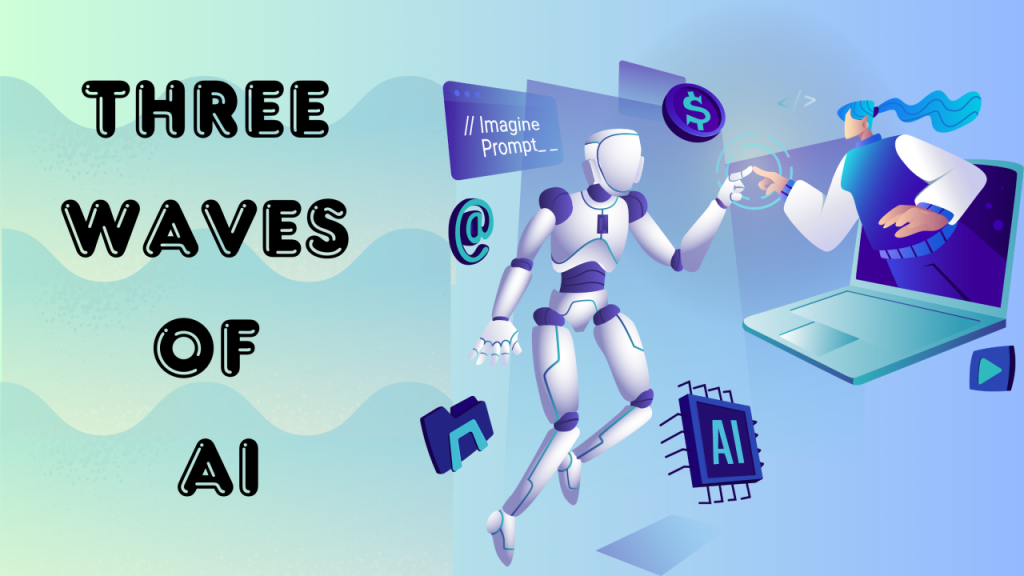
If you want to know where we’re heading, look back. Automation doesn’t show up all at once it comes in waves. Each one wipes out certain kinds of work while new roles pop up in unexpected places.
First Wave: Muscle and Might (1760-1960)
Steam engines, spinning jennies, assembly lines. Machines started taking over the heavy lifting. The Luddites didn’t hate new tech; they just saw their skills being turned into boring, repetitive jobs. Still, machine powered factories gave rise to new roles mechanics, engineers, supervisors, railroad crews. The real pain wasn’t about job loss, but the tough transition and folks finding their old skills didn’t fit anymore.
Second Wave: Routine and Repetition (1960-2010)
Then computers arrived and started automating the routines in people’s heads. Bank tellers had to make room for ATMs. Travel agents watched online booking eat their business. Data entry jobs faded as software took over. This time, it wasn’t about muscle, it was about all the middleman work processing, filing, following rules. Out of the chaos came a new set of jobs: software developers, digital marketers, data analysts.
Third Wave: Pattern and Prediction (2010-Present)
Now we’re here. Modern AI, especially machine learning, doesn’t just follow instructions it figures them out on its own. It sees patterns nobody else can in oceans of data. This wave isn’t just picking off one kind of job; it’s reaching into almost every field out there.
The Vulnerability Matrix: What Makes a Task “Automable”?
Algorithms don’t see all jobs the same way. Researchers have figured out what makes some tasks easy targets:
High Predictability: If the input and output are clear like processing invoices, or answering “What’s your return policy?” AI eats it up.
Data-Rich Environment: The more digital breadcrumbs a job leaves, the better. Radiology churns out thousands of labeled images. Legal discovery? Millions of documents. Machine learning loves a big, detailed buffet.
Limited Physical World Interaction: Robots are getting better, but the real world is still messy. Folding towels, working on a construction site, or calming a kid having a meltdown these things are expensive and tricky for machines to handle.
Absence of True Creativity or Deep Context: AI can remix what’s out there, but real novelty? Not so much. It can write a Shakespearean sonnet, but it’s not nursing a broken heart. It can suggest a new molecule, but it doesn’t feel the spark of discovery.
Picture two medical pros: a radiologist and an ER nurse. The radiologist spends the day with images lots of patterns, tons of data. AI is already catching some cancers better than any person. So now, rather than just spotting the thing, radiologists are stepping in to interpret: “The AI found a possible tumor, but let’s think about what this means for this patient, given their story.”
Meanwhile, the ER nurse? Total chaos. One minute they’re soothing a terrified patient; the next, reading between the lines when someone can’t explain what’s wrong, making snap calls without all the facts, bringing a human touch that no machine can copy. Every shift is a new mix of problems that no algorithm could ever fully prepare for.
Part II: The Contradiction at the Heart of Automation
The Productivity Paradox: More Efficiency, More Jobs?

This part always catches people off guard. When you look at the numbers, you see something weird: as productivity goes up, so do jobs. It’s the opposite of what most people expect.
Think about ATMs. When they showed up in the 1970s, everyone figured bank tellers were toast. But that’s not what happened at all. The number of tellers in the US actually doubled from about 250,000 in 1970 to 500,000 by 2010. So what gives?
ATMs made it cheaper for banks to run branches, so they opened more of them. Every branch still needed staff. The teller’s job just changed. Less time counting cash, more time helping customers, selling services, and solving problems.
This is Jevons Paradox in action: making something more efficient can mean people use it more, not less. AI will wipe out some tasks, sure, but it also makes whole categories of services cheaper. That can spark new demand and even invent jobs that didn’t exist before.
The “Last Mile” Problem: Why Humans Still Matter
Self-checkout lanes are a perfect example. Sure, they automate scanning and payments maybe 80% of the cashier’s job. But what about card declines, age checks for alcohol, coupons that won’t scan, or customers who just get lost in the interface? That last chunk the tricky stuff still needs a human.
And handling those exceptions? That actually takes a lot of work. Suddenly you need people who can step in where the algorithm can’t supervisors, exception handlers, and real, empathetic humans to bridge the gap between perfect code and all our messy reality.
Take journalism. The Associated Press uses AI to churn out thousands of earnings reports and sports blurbs. That frees up reporters from the boring, repetitive stuff. But it doesn’t get rid of journalists. Now they can dig into investigations, deep analysis, human stories the parts algorithms just can’t handle.
Part III: The Quiet Revolution:—How Jobs Are Already Changing

Let’s get out of theory and look at what’s actually happening. The shift isn’t some far-off possibility. It’s going on right now, mostly behind the scenes.
1. The Coders Writing Themselves Out of a Job?
There’s a weird twist in software these days. Tools like GitHub Copilot, Amazon CodeWhisperer, and Replit’s AI spit out whole chunks of code, fix bugs, and autocomplete functions. Junior devs who used to spend days slogging through boilerplate or tracking down typos now turn out more work, faster.
Is this replacing people? For simple coding, maybe. But talk to senior engineers and you’ll hear something else. The boring stuff is fading away, and they’re focusing on architecture, system design, really understanding user needs, and solving problems nobody’s seen before. The job is shifting from “just code it” to “figure out what to build, and why.” It’s less about syntax, more about strategy.
2. The Marketer and the Algorithmic Mirror
Modern marketing is practically run by AI now. Ad buying, content recommendations, predicting which customers stick around—all of it’s automated. A digital marketer can whip up hundreds of ad versions, test them instantly, and put money behind the winners in real time.
But the marketer who only presses buttons is already out of the picture. The ones who succeed now are part strategist, part psychologist figuring out why certain messages click, catching the cultural details the algorithm misses, building a brand, and making the tough calls about data and personalization. The tools changed, but the need for sharp human judgment just got stronger.
3. The Factory Floor: From Manual Labor to Cognitive Supervision
Step onto the floor of a modern car plant. You’ll see robots welding and painting with a level of accuracy people just can’t match. But look up in the glass-walled control rooms here’s where the real shift has happened. Workers aren’t wrestling with heavy machinery; they’re glued to dashboards, watching for weird blips and signs of trouble before anything actually breaks. They’re not just putting cars together. Now they’re “flow optimizers” and “system diagnosticians.” The job is less about muscle and more about brainpower. Physical strain goes down, but the mental pressure? That shoots way up.
4. The Legal Profession: Beyond the Discovery Room
AI tools like ROSS or eDiscovery can rip through millions of documents in a few days, connecting dots and digging up relevant cases with a memory no human can match. That’s gutted the old entry-level grind reviewing documents for months on end, which used to be how junior associates and paralegals cut their teeth.
Now, the lawyers who stick around aren’t the ones who read fastest. They’re the ones who can build a story that convinces a jury, handle tough negotiations with empathy, help clients think through risks that go beyond old legal precedents, and make tough ethical calls. The field is splitting in two: you’ve got the AI-powered legal technicians, and then you’ve got the real strategists.
Part IV: The Invisible Labor:—What AI Creates Even As It Destroys

Every time AI wipes out a job, new ones pop up in places you probably didn’t expect. And these aren’t just tech gigs like machine learning engineers. These jobs exist because AI exists.
The New Craft Professions:
- AI Trainers and Data Curators: An AI model is only as smart as the data behind it. People have to find, clean up, label, and sometimes even make this data from scratch. Some of it is mind-numbing like labeling thousands of street signs for self-driving car cameras. But some of it is super specialized, like curating medical images with expert notes.
- Prompt Engineers: These folks don’t really “program” in the old sense. Their job is to talk to big language models, coaxing them to give the right answers. It’s kind of like teaching, or working with something from another world.
- AI Ethicists and Auditors: These are the watchdogs. They dig into algorithms, hunt for bias, check that everything’s above board with the law, and think about what all this tech is doing to society. You need a weird mix of philosophy, law, and computer science.
- “Explanation Interface” Specialists: As AI starts making real-world decisions who gets a loan, what treatment a patient gets laws like the EU’s GDPR say you have to explain the logic. Someone has to crack open the “black box” and put it in plain English.
The Human-AI Hybrid Roles:
- The Diagnostic Duo: A radiologist teamed up with an AI system is better at spotting problems than either one alone.
- The Creative Director + Generative AI: A person brings taste, emotion, and editing skills; AI generates ideas, drafts, and options.
- The Teacher as Learning Coach: AI tutors handle the drills and practice, so teachers can focus on motivating kids, building relationships, and sparking curiosity.
The Resurgence of the “Human” Professions:
Funny enough, as AI gets into everything, the jobs that feel the most human might matter even more:
- Skilled Trades plumbers, electricians, carpenters working in messy, unpredictable environments.
- Care Professions elder care, childcare, nursing where empathy and a personal touch can’t be faked.
- Experience Creators in hospitality, entertainment, wellness if the product is the human connection, robots just can’t compete.
- Craftspeople and Artisans making things where a tiny flaw or quirk adds value, not takes it away.
Part V: The Psychological Landscape Beyond Economics

People talk a lot about AI and jobs in terms of numbers how many positions will vanish, what the new ones will look like, and all that. But honestly, the bigger shock is probably psychological and cultural.
The Identity Crisis of Work
Work and identity. They’ve been tangled up for ages. Ask someone what they do, and you’re not just after their job title you’re after who they are. But what happens if your job is mostly about supervising or working alongside AI? That old foundation of self starts to wobble.
Maybe this shift forces us to separate who we are from what we produce. That sounds healthier, but the road there won’t be smooth. People and societies will have to find new ways to build meaning, community, and status that don’t just revolve around a job title.
The “Meaningful Work” Divide
There’s a real risk we’ll end up with work split in two:
- High-engagement, creative, strategic roles. These go to people with the right education, adaptability, and networks folks who can team up with AI as partners.
- “Filler” tasks. The leftover, scattered bits odd jobs, gig work, the unpredictable stuff AI can’t quite do yet. Too random to automate, too fragmented to build a real career on.
Stopping this kind of divide is one of the toughest social and economic challenges the AI age throws at us.
The Erosion of the Apprenticeship Model
Think about how people used to learn a trade. You’d start at the bottom, doing the routine stuff junior lawyers reviewing documents, rookie reporters writing briefs, junior accountants crunching numbers. That’s where you got your training wheels. But if AI eats up those entry-level jobs, where do new folks get their start? We’ll have to invent new ways to teach, mentor, and credential people maybe through simulations or different kinds of mentorship that don’t rely on old school grunt work.
Part VI: Navigating the Transition:—A Toolkit for the Human Future

Change is coming fast. It’s a lot to take in, but we’re not powerless. Here’s what people, companies, and whole societies can actually do.
For the Individual: Cultivating Durable Skills
Trying to outpace AI at what it does best speed, sheer volume, recognizing patterns won’t work. Instead, double down on what makes us human:
- Complex problem framing. Don’t just solve what’s in front of you figure out what actually matters. AI’s a great solver, but humans need to decide which problems to tackle in the first place.
- Integrative thinking. Pull together ideas from tech, ethics, psychology, design mix it all up and create something new.
- Social and emotional intelligence (EQ). Empathy, persuasion, negotiation, trust-building, reading a room. These are tough for machines because they’re tangled up in culture and biology.
- Physical dexterity and adaptability. Navigating messy, unpredictable situations in the real world.
- Ethical reasoning and moral judgment. Making the tricky calls, understanding context, and standing by your values.
For Organizations: From Automation to Augmentation
The smartest companies aren’t just automating they’re rethinking the whole relationship between humans and AI.
- Stop asking, “What can we automate?” Start asking, “How can AI help our people do more, create more, be better?”
- Make learning a constant part of the job, not just a perk on the side.
- Rethink job design so humans and AI actually work together figure out who leads when, and how they hand things off.
- Track new kinds of progress: adaptability, how fast people innovate, and how customers feel about interactions with human plus AI teams.
For Society: Building the Groundwork
Tech keeps moving forward, no surprise there. But the way it shapes our lives? That’s still in our hands. Here’s what we can do:
- Shake Up Education: It’s not about just handing out facts anymore AI’s already got that covered. Let’s spark curiosity, teach kids to think for themselves, and help them adapt fast. More hands-on projects, more ethics, more mixing up subjects that usually don’t go together.
- Build a Stronger Safety Net: People are switching jobs more often, so we need things like benefits you can take with you from job to job, healthcare for everyone, and unemployment insurance you can actually count on. These keep folks steady when the ground keeps shifting.
- Rethink How We Share Wealth: AI’s making some people and companies way richer, while others get left behind. It’s time to look at things like smarter taxes, wage support, or maybe even a basic income for everyone just to keep society running smoothly and make sure people can still afford what’s being produced.
- Work Together Globally: AI’s being built everywhere, but the job shakeups hit hardest at home. We can’t win by undercutting each other. Countries need to talk, set fair standards, and make sure workers everywhere get a fair shot.
Epilogue: The Real Question
We started out worried about whether AI will take our jobs. But after looking closer, there’s a bigger question staring us in the face:
It’s not just, “What will we do when machines can do it all?” It’s, “What’s actually worth doing, and what makes us human anyway?”
Machines replaced the hand weaver, but people still wanted beautiful fabric they just found new ways to make it. The washing machine took over the hard labor, but people still cared about clean clothes. All that changed was how we spent our time.
If we get this right, AI could do the same thing, just on a bigger scale. All the boring, repetitive stuff? Let the machines handle it. That frees us up for the messy, meaningful parts creativity, judgment, empathy, connection, and finding meaning in what we do.
This isn’t going to be easy. People will lose jobs. Whole communities might struggle. It’s going to hurt in places, and pretending otherwise is just lying to ourselves.
But inside this mess is a chance. We get to rethink our relationship with work and technology. If we’re smart, we’ll let machines do what they’re good at, so more of us can do what humans do best: understand each other, make beautiful things, chase down big questions, and build a world that’s about more than just getting things done.
No algorithm is going to decide how this ends. It comes down to us our choices, day by day to learn, adapt, connect, and refuse to let technology strip away what matters. The machines are getting smarter. The real question is, what will we become?
Explore Our Ai Category


