The NIST Cybersecurity Framework pretty much sets the standard these days for organizations serious about tightening up their digital security. The National Institute of Standards and Technology put it together as a flexible, voluntary guide something any business, big or small, can use to get a handle on cybersecurity risks. If you’re running a small shop worried about customer data, or you’re the security lead at a giant corporation, getting to know the NIST framework gives you a clear path to stronger defenses.
This guide breaks down what the NIST Cybersecurity Framework actually is, why it’s worth your attention, how it’s built, and probably most important how you can put it to work to protect your organization as online threats keep getting nastier.
What Is the NIST Cybersecurity Framework?
NIST CSF, as people call it, lays out a set of guidelines and best practices so organizations can get a grip on their cybersecurity risks. After a wave of big cyber attacks on critical infrastructure, a 2013 executive order got the ball rolling, and NIST built the framework, mainly for industries like energy, finance, and telecommunications. But it turned out to be so practical and flexible that everyone started using it, no matter the industry.
What really sets the NIST framework apart? It’s not some rigid rulebook. It doesn’t tell you which security tools to buy or force you to check endless compliance boxes. Instead, it gives everyone a shared language and a way to think about cyber risk systematically. You can tweak it to fit your own situation, your risk appetite, and the resources you actually have.
And no, it doesn’t wipe out the need for other standards or regulations you’re already following. Think of it like a bridge: it helps you line up whatever you’re doing ISO 27001, COBIT, industry specific rules with one clear structure. It’s a way to spot what you might be missing and shore up your defenses without tossing everything else out the window.
Why the NIST Framework Matters
Let’s be real: cybersecurity is overwhelming, especially for organizations without a full time security team. There are endless threats, mountains of tech options, and more standards than you can count. A lot of businesses just freeze, not sure where to even begin. The NIST framework cuts through all that noise. It gives you a way to focus on what really matters and where to start.
Key Benefits of Using NIST CSF:
- Gives everyone in your company a common way to talk about cybersecurity
- Focuses your efforts on real risks, not just ticking compliance boxes
- Fits any organization, no matter your size or industry
- Helps you spend your security budget where it matters most
- Shows customers and partners you take security seriously
- Makes it easier to line up with regulations you already need to follow
- Sets you up for ongoing improvement, not just a one-and-done fix
On top of all this, lots of organizations find that using the NIST framework actually builds trust with customers, business partners, and regulators. When you can show you’re handling cybersecurity in a thoughtful, organized way, people notice. In a world where data protection keeps climbing the priority list, that kind of trust can set you apart.
The Five Core Functions

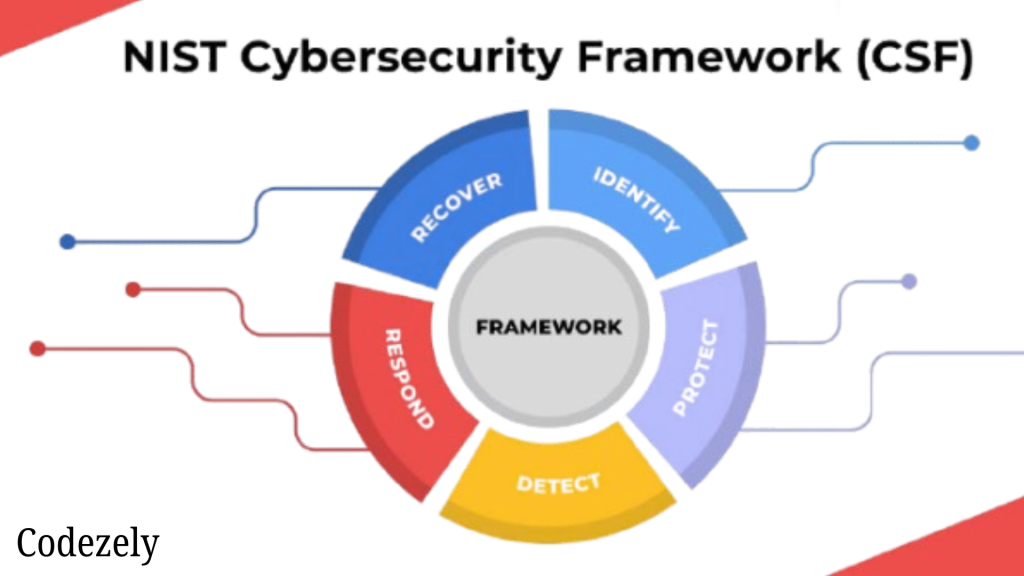
At the center of the NIST Cybersecurity Framework are five core functions. These aren’t a checklist you work through in order they’re ongoing, overlapping things organizations do all the time to keep their systems safe.
Identify
Everything starts here. You can’t protect what you don’t even know you have. That’s why this function is all about figuring out what’s in your environment systems, devices, data, even physical spaces and what needs to be protected.
So, you make a list of all your assets: hardware, software, data, facilities, the works. You also look at the big picture: What’s mission critical? Which data is sensitive? Who can get to what? What rules or laws does the company need to follow? All these questions help you set your priorities and shape your security decisions going forward.
Key parts of Identify:
- Asset inventory and management
- Understanding the business environment
- Governance and policies
- Risk assessment
- Risk management strategy
- Supply chain risk management
If you skip this step, you end up wasting time and money protecting things that don’t matter while leaving your most important systems wide open. A lot of organizations realize at this stage that they’ve got blind spots like shadow IT, forgotten databases, or random devices nobody’s watching. Those gaps can turn into big problems fast.
Protect
Protect is where you put up the defenses. The goal: make sure your essential services run smoothly and keep trouble out or at least limit the damage if something slips through. This is where most of the traditional security stuff happens: firewalls, passwords, training, encryption, all that.
Protection means more than just tech, though. It’s about managing who gets access to what, teaching people not to click on sketchy links, locking down sensitive data, and keeping your security tools up to date. Nobody gets perfect security, but you want your defenses to match the risks you found in the Identify phase.
Protect covers:
- Managing identities and controlling access
- Security awareness and training
- Data security
- Information protection processes
- Keeping protective tools maintained
- Rolling out new security tech
A lot of companies put most of their energy here, probably because you can see and touch these technologies. But there’s more to security than just building walls. You need to know when something slips past and be ready to act fast.
Detect
So, what happens when someone gets through your defenses? That’s where Detect comes in. Even the best protection isn’t perfect attackers are clever, and some threats will get by. Detect is about spotting those problems quickly, so you can jump into action before things spiral out of control.
Detection can be as simple as checking your logs or as complex as running a 24/7 security operations center. Your approach depends on your size, risk level, and resources. Some small businesses use outside security services, while big companies might have a full team on duty around the clock.
Detect involves:
- Spotting unusual activity or events
- Continuous security monitoring
- Setting up and running detection processes
- Testing and making sure detection works
- Communicating when you find something
The time it takes to notice an attack what people call “dwell time” makes a huge difference. If attackers stick around for months before you realize it, the damage can be massive. But if you catch them within hours or days, you cut their chances to do harm way down. Good detection shrinks that window and keeps you one step ahead.
Respond
When a security event hits, you need a plan and you can’t just make it up on the fly. The Respond function is all about knowing exactly what to do when something goes wrong. It’s about acting fast, keeping the damage in check, and getting your team back on track as quickly as possible.
Good response doesn’t happen by accident. You have to map out everyone’s roles ahead of time, nail down how you’ll communicate, figure out how you’ll investigate what happened, and decide how you’ll keep the problem from spreading. And when it’s all over, you use what you’ve learned to make your defenses stronger. Most organizations build incident response teams that pull in people from IT, security, legal, communications, and business leadership so nothing gets missed.
Here’s what the Respond function covers:
- Planning and documenting your response
- Communicating during and after incidents
- Digging into what happened and why
- Containing the incident and limiting damage
- Learning from each event so the next response is even better
If you skip this planning, things unravel fast when an incident strikes. People get flustered, make bad calls, and without clear steps to follow, responses slow down giving attackers more time to do damage. That’s why it’s smart to run tabletop exercises and practice drills, so your team knows exactly what to do before a real emergency hits.
Recover
Recovery is about getting things back to normal after a cyber incident and making sure your fixes actually work. It’s not just about hitting restore on your backups. You need to check that your systems are clean, decide which ones matter most, and bring those back first. And as you go, you look for ways to make your defenses stronger so the same problem doesn’t happen again.
Here’s what the Recover function covers:
- Mapping out your recovery steps
- Making improvements based on what you’ve learned
- Keeping everyone in the loop inside and outside the organization
- Coordinating with partners and stakeholders
- Testing your recovery process to be sure it works
If you don’t plan recovery, you risk making things worse. If you restore systems before clearing out attackers, you’re just inviting them back in. And if you don’t restore the right systems first, you might get your tech running but keep the business stuck.
Implementation Tiers: Measuring Maturity
On top of the five core functions, the NIST framework uses “Implementation Tiers” to measure how mature your risk management really is. These tiers help you see where you stand and where you want to go.
The Four Implementation Tiers:
- Tier 1 – Partial: Risk management is mostly ad hoc, people react as things come up, and not everyone’s on the same page.
- Tier 2 – Risk Informed: Management pays attention and some structure exists, but there’s no formal policy and consistency is spotty.
- Tier 3 – Repeatable: You have official policies, and everyone follows the same process across the board.
- Tier 4 – Adaptive: The organization keeps learning from experience, adjusts practices proactively, and always aims to get better.
Most small and midsize organizations land at Tier 1 or 2. Big companies with dedicated security teams usually hit Tier 3. Tier 4 is tough few organizations reach that level everywhere at once. And these aren’t strict levels you move through one by one; different departments might be at different tiers depending on their risks and needs.
Creating a Target Profile
One of the most practical parts of the framework is the idea of profiles. Think of them as tailored versions of the framework that match your company’s needs, risk appetite, and resources. You start by figuring out your “Current Profile” where you are right now. Then you set your “Target Profile” where you want to be.
The gap between these two profiles shows you where to focus. This way, you don’t spread your resources too thin or try to cover every possible security control. You zero in on changes that actually make a difference for your risk.
Profile Development Process:
- Set your scope and goals
- List your systems, assets, and data
- Check your current cybersecurity practices against the framework
- Do a risk assessment
- Define your target profile based on what matters most
- Compare where you are to where you want to be
- Prioritize and map out your improvements
- Implement changes, then reassess and repeat
This process takes a big, abstract framework and turns it into real action plans that actually fit your organization. Even if two companies work in the same industry, their target profiles end up looking pretty different mostly because their business models, risk tolerance, and what they’re already good at aren’t the same.
Getting Started with NIST Framework
If you’re new to the NIST framework, just looking at the documentation can be overwhelming. It’s long. Hundreds of pages, and honestly, it’s easy to feel lost before you even start. But you don’t need to be perfect on day one, and you definitely don’t have to roll out everything at once.
Start simple. Pull together a small team grab people from IT, security, business leadership, legal, and compliance. You want a mix of voices, so your security plans actually match what the business needs, not just what one group thinks is best. Use the framework’s five core functions as a jumping off point for the first conversation about where your security stands right now.
Initial Steps:
- Grab the framework docs from NIST and read through them.
- Figure out what your most important business assets and processes are.
- Take a hard look at your current security practices and see how they map to the five functions.
- Start writing down your policies, procedures, and controls.
- Rank the gaps you find based on which ones put you at most risk.
- Build a roadmap take it one phase at a time.
- Set up some metrics so you can actually track progress.
- Make a plan to check in regularly and update as things change.
A lot of organizations find value even with partial adoption of the framework. You don’t have to do it all at once, or hit the top maturity level right away. Progress comes in steps, and every step forward makes your security stronger.
Common Implementation Challenges
Most organizations hit a lot of the same roadblocks when they start out. Seeing these coming makes it easier to plan for them.
Typical Challenges:
- Not enough money or staff for security projects
- Struggling to get buy-in or funding from leadership
- Feeling overwhelmed by how big the framework is, especially in smaller companies
- Security competing with other business priorities
- Not enough people with cybersecurity skills
- Staff pushing back on new procedures
- Hard to measure if security is actually improving
None of this is impossible to handle. If you’re tight on resources, focus on phasing things in and look into managed services to fill gaps. Getting executives on board is easier when you talk about risk, compliance, or gaining an edge over competitors not just “security.” The framework feels less overwhelming if you focus on what matters most first, instead of trying to do it all at once.
The Framework’s Evolution
The NIST Cybersecurity Framework keeps evolving. NIST updates it regularly to keep up with new threats, tech, and what organizations need. Since the framework first came out in 2014, it’s seen a few major updates each time, NIST listens to feedback and tackles new challenges.
Lately, there’s been a bigger push on managing risks in the supply chain. NIST now gives more guidance on how to deal with threats from vendors and partners, because your security isn’t just about what happens inside your own walls anymore.
Knowing the framework will keep changing makes it clear: cybersecurity isn’t a box you check once and forget. Threats, technology, and business needs all keep shifting, so your security approach has to move with them.
Conclusion: A Practical Path Forward
The NIST Cybersecurity Framework gives organizations what they’re really looking for a practical, clear way to think about and improve security. It doesn’t tell you exactly which tech to buy or controls to use. Instead, it’s flexible, so you can tailor it to your needs and still have a common language to talk about security across the company.
Yes, it takes effort and resources to implement, but you don’t need to be perfect or throw a ton of money at it from the start. Start small. Pick the most important areas, make improvements, and keep building on that. The real trick is to be honest about where you are now, understand your risks, and set achievable goals.
Cyber threats aren’t slowing down, and data breaches make the news almost every day. The structure NIST provides helps organizations of all sizes toughen up their security, protect what matters most, and bounce back when things go wrong. Whether you’re just starting out or pushing your program to the next level, the NIST framework is solid ground to build on.
Explore Our Cybersecurity Category